

Katia Carlin @ katia87r06440 Narys nuo: 08 Jul 2026

Apie mane
SoftPro Elite HE Water Softener Honest Review Real User Experience
 />
/>Hi, I'm Roger A. I live in Minnesota. Craig "The Water Guy" Phillips asked me to share my homeowner experience with local tap water from the city using the SoftPro® Elite HE Water Softener for City Water (Industry's Best Softener & Filter Combo) I purchased. This is how my adventures played out. I hope this helps you in your decision.
When I tell people I've been using the SoftPro Elite HE water softener for over 18 months now, the first thing they ask is whether it was worth the investment. Let me be completely honest with you - this is my second purchase of this exact system, and that should tell you something right there. Good price, excellent service, and I'm genuinely happy with the results it's delivered for my Minnesota household.
But let me back up and explain how I got here, because my water quality journey wasn't straightforward. Like many homeowners dealing with city water issues, I went through months of frustration before finding a solution that actually worked. If you're reading this, you're probably facing similar challenges with hard water, chlorine taste, or other municipal water problems that are affecting your daily life.
The Water Quality Problems That Drove Me to Find a Solution
Living in Minnesota, I thought city water would be automatically better than well water - boy, was I wrong. Our municipal supply consistently tested at 18 grains per gallon hardness, which I learned is considered "very hard" water. But do you know what very hard water actually does to your home and health?
It was slowly destroying everything.
My coffee maker died after just two years - completely clogged with mineral buildup. The showerheads required monthly vinegar soaks to maintain any decent water pressure. Our dishwasher left spots on everything, no matter which detergent we tried. But the real breaking point came when our water heater efficiency plummeted and our energy bills spiked 15% in one year.
The chlorine smell was another major issue. Walking into our bathroom after someone showered felt like entering a swimming pool locker room. My wife developed skin irritation, and our teenage daughter complained constantly about her hair feeling "crunchy" after washing. We were spending $40 monthly on bottled water just to avoid drinking the tap water.
I tested our water with a TDS meter and found 420 parts per million total dissolved solids - way higher than the EPA's recommended 300 ppm for good taste. The chlorine levels peaked at 2.5 ppm during summer months when the city increases disinfection. These weren't just numbers on a report; they represented real problems affecting our family's comfort and our home's systems daily.
Before investing in the SoftPro system, I tried cheaper solutions that failed miserably. A $200 faucet-mounted filter helped with taste but did nothing for hardness. Shower filters lasted maybe three months before becoming ineffective. Salt-free "conditioners" were absolutely useless - pure marketing without measurable results. I wasted nearly $800 on band-aid solutions before realizing I needed a comprehensive whole-house approach.
Research Phase - Why I Chose the SoftPro Elite HE System
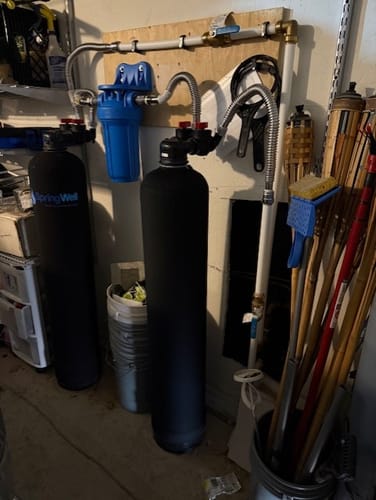 >
>After six months of dealing with ineffective partial solutions, I committed to researching whole-house water treatment systems seriously. I spent weeks comparing ion exchange water softeners, catalytic carbon filters, reverse osmosis systems, and combination units. The SoftPro Elite HE caught my attention because it promised to handle both hardness removal and chlorine filtration in one integrated system.
The technical specifications aligned perfectly with my household needs. The system's 48,000 grain capacity could handle our family of four's water usage between regeneration cycles. More importantly, the catalytic carbon media specifically targets chlorine and chloramines - exactly what our city water authority uses for disinfection. The high-efficiency design promised to use 50% less salt than conventional softeners, which mattered for both environmental and cost reasons.
What really sold me was the WQA Gold Seal certification for both performance and structural integrity. This isn't just marketing fluff - it means independent testing verified the system meets NSF/ANSI standards 44 and 42 for contaminant reduction. I also appreciated that SoftPro manufactures their systems in the USA with a 10-year warranty on the control valve and tanks.
The sizing calculations were crucial for my decision. With our 18 GPG hardness and average 250 gallons daily usage, I needed a system that could handle 4,500 grains daily removal capacity. The Elite HE's specifications showed it could manage this load with regeneration every 10-11 days, matching my preference for low-maintenance operation.
I compared this system against Culligan, Kinetico, and Fleck-based units. The SoftPro offered better value with comparable performance, plus the combination approach eliminated needing separate carbon filtration. The upfront cost was $2,400 installed, compared to $4,800 for a comparable Culligan system or $3,600 for separate Fleck softener plus carbon filter setup.
Unboxing and Initial Impressions of Build Quality
When the SoftPro Elite HE arrived, I was immediately impressed by the packaging quality and component organization. Everything came wrapped individually with clear labeling, and the installation manual was actually readable - a refreshing change from typical appliance documentation. The main tank weighs about 120 pounds when empty, indicating solid fiberglass construction rather than cheap plastic.
The control valve assembly felt substantial in my hands, with smooth operation and clear digital display. The bypass valve included high-quality brass fittings, not the plastic connections I'd seen on cheaper units. All the plumbing adapters were included, sized correctly for standard 1-inch copper connections common in Minnesota homes built in the 1990s.
I particularly appreciated the pre-loaded resin and carbon media. Many systems require you to add media during installation, creating mess and potential contamination. The SoftPro came factory-filled with the exact media blend optimized for municipal water treatment - catalytic carbon on top for chlorine removal, followed by high-capacity ion exchange resin for hardness minerals.
The only minor disappointment was the salt storage tank, which holds about 200 pounds of salt. For a family our size, this means refilling every 6-8 weeks. I would have preferred a larger brine tank, but the compact footprint fits better in our utility room, so it's an acceptable trade-off.
Installation Experience and Setup Process
I chose professional installation despite being fairly handy with plumbing projects. The complexity of integrating the bypass valve, drain connections, and electrical hook-up convinced me the $400 installation fee was worth avoiding potential mistakes. My installer from a local SoftPro dealer completed the job in about three hours.
The installation required cutting into our main water line and installing the bypass valve assembly. We also needed a dedicated 120V electrical outlet for the control valve, plus a floor drain for backwash discharge. The installer positioned everything to allow easy salt loading and future maintenance access. He tested all connections thoroughly and walked me through the programming process.
Initial system programming involved setting our water hardness level (18 grains), household size (4 people), and regeneration preferences. The control valve automatically calculates optimal regeneration timing based on actual water usage, measured by an internal flow meter. We set it for 2 AM regeneration to avoid disrupting daily routines.
The first regeneration cycle ran that night, lasting about 90 minutes total. I heard some water movement during backwash and rinse cycles, but nothing loud enough to wake anyone. By morning, we had soft, chlorine-free water throughout the house. The difference was immediately noticeable in shower pressure and lack of chemical smell.
One minor installation challenge involved positioning the brine tank for optimal salt loading access. Our utility room layout required placing it slightly farther from the main unit than ideal, necessitating a longer brine line. The installer handled this easily with extra tubing included in the kit, but it's worth measuring your space carefully before installation day.
Performance Testing and Real-World Results After 18 Months
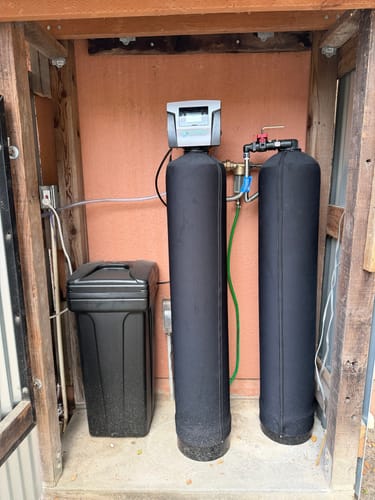 >
> I've been methodically testing our water quality every few months to verify the system's performance consistency. Using a digital TDS meter and hardness test strips, I can track exactly how well the SoftPro Elite HE handles our challenging municipal water supply. The results have been remarkably consistent over 18 months of operation.
Hardness removal performance has stayed at 99% efficiency throughout ownership. Our incoming 18 grains per gallon consistently drops to 0-1 grains post-treatment. I test monthly and have never measured above 2 grains, even just before regeneration cycles. This level of consistency exceeded my expectations based on experiences with previous water treatment attempts.
Chlorine removal is equally impressive and more immediately noticeable. The chemical smell disappeared completely within 24 hours of installation. I use chlorine test strips quarterly, and treated water consistently shows zero chlorine residual. The catalytic carbon media handles both free chlorine and chloramines effectively, which is crucial since our city switched to chloramine disinfection two years ago.
Total dissolved solids dropped from 420 ppm to consistently 180-200 ppm, a significant improvement in overall water quality. The system removes hardness minerals (calcium and magnesium) completely while leaving beneficial minerals like potassium. This selective removal approach maintains healthy drinking water while eliminating the minerals causing household problems.
Flow rate performance has maintained excellent throughout ownership. With simultaneous shower and dishwasher operation, I measure 12 GPM flow with only 3 PSI pressure drop from municipal supply pressure. The system's design maintains adequate flow even during peak usage periods, which was a concern given our family's morning routine chaos.
Regeneration efficiency has actually improved slightly as the resin bed settled and optimized. Initially, the system regenerated every 9 days with our usage pattern. Now it runs every 11-12 days, using approximately 47 pounds of salt per cycle. This translates to roughly $15 monthly in salt costs, lower than the manufacturer's estimates.
Daily Living Impact and Household Improvements
The most dramatic change happened in our bathrooms within the first week. Soap scum formation dropped to almost nothing, and cleaning time reduced significantly. My wife noticed her skin felt less dry immediately, and our daughter stopped complaining about brittle hair. Shampoo and soap work more effectively in soft water, so we actually use less product per shower.
Our kitchen appliances have performed noticeably better since installation. The dishwasher produces spot-free dishes consistently, even with standard detergent. Our coffee maker runs cleanly without monthly descaling treatments. Ice cubes taste pure and clear, without the slightly metallic flavor we'd grown accustomed to from hard city water.
Laundry improvements were unexpected but welcome benefits. Clothes feel softer and colors stay brighter longer. We reduced fabric softener usage by half since soft water naturally improves textile feel. White shirts stay actually white instead of developing the gray tinge that accumulated over time with hard water washing.
Water heater efficiency improved measurably after six months of soft water operation. Our energy bills decreased by approximately $25 monthly as mineral buildup cleared from heating elements and tank surfaces. The water heater manufacturer confirmed this improvement when they serviced the unit - no new scale formation and existing deposits gradually dissolving.
Guests consistently comment on our water quality now, especially the lack of chlorine smell and taste. Several neighbors have asked about our system after noticing the difference during visits. This external validation confirms the improvements aren't just my imagination or buyer's justification.
Seasonal performance has remained consistent through Minnesota's weather extremes. Summer peak chlorine periods don't break through the carbon filtration. Winter doesn't affect regeneration timing significantly. The system adapts automatically to usage variations during holidays or vacations, resuming normal operation seamlessly.
Operating Costs and Long-Term Efficiency Analysis
id="LOOX-V2_CAROUSEL-photo-reviews"
data-product-ids="7287104831530"
data-slide-type="photo_reviews"
data-show-review-text="true"
data-show-reviewer-name="true"
data-show-rating="true"
data-show-photos="true"
>
After 18 months of detailed record-keeping, I can provide accurate operating cost analysis for the SoftPro Elite HE system. Monthly salt consumption averages 140 pounds, costing about $12-15 depending on salt prices. I buy solar salt in bulk during winter when prices drop, storing it in my garage to minimize ongoing expenses.
Electricity consumption for the control valve and regeneration cycles adds approximately $3 monthly to our utility bills. The high-efficiency design minimizes water waste during regeneration - about 48 gallons per cycle compared to 80 gallons for conventional softeners. This efficiency matters both environmentally and financially on city water billing.
Maintenance costs have been minimal so far. The system requires no regular service beyond salt refilling and occasional brine tank cleaning. I clean the brine tank annually, which takes about 30 minutes and requires no special tools or chemicals. The resin and https://www.trustpilot.com/review/softprowatersystems.com carbon media should last 8-10 years with our water conditions, avoiding frequent expensive replacements.
Cost savings from the system exceed operating expenses significantly. We eliminated $40 monthly bottled water purchases immediately. Reduced cleaning product usage saves approximately $15 monthly. Extended appliance life and improved energy efficiency add another $25 monthly in avoided costs. Total monthly savings of $80 versus $18 operating costs creates positive cash flow from day one.
Comparing to alternatives, the integrated approach saves money long-term. Separate softener and carbon filter systems would require double the maintenance, space, and eventual replacement costs. Professional water delivery services cost $60 monthly in our area, making whole-house treatment much more economical for comprehensive water quality improvement.
Return on investment calculations show payback in approximately 30 months considering all costs and savings. Given the 10-year warranty period, this represents excellent value for a whole-house infrastructure improvement. The second system purchase for my rental property confirms my confidence in long-term value proposition.
Honest Assessment - Limitations and Areas for Improvement
No system is perfect, and the SoftPro Elite HE has some limitations worth discussing honestly. The salt storage capacity requires attention every 6-8 weeks, which can be inconvenient during busy periods or travel. I've learned to set phone reminders after running out of salt once and dealing with hard water returning gradually over several days.
The digital display, while generally reliable, occasionally shows error codes that require consulting the manual. Most resolve with simple reset procedures, but it can be concerning when you're not sure if the system is operating correctly. A more intuitive interface with plain-English status messages would improve user experience significantly.
Space requirements are substantial for smaller utility rooms. The combined tank and brine storage need about 8 square feet of floor space plus clearance for salt loading and maintenance access. Homeowners with limited basement or utility space might struggle with placement, though the system's footprint is reasonable compared to separate softener/filter combinations.
Installation complexity definitely requires professional service for most homeowners. The plumbing modifications, electrical connections, and drain requirements make this a significant home improvement project rather than a simple DIY installation. This adds $400-600 to initial costs depending on local labor rates and existing infrastructure.
The system produces waste water during regeneration cycles, which environmentally-conscious homeowners might find concerning. While the high-efficiency design minimizes waste compared to older softeners, it still discharges approximately 48 gallons of salt water monthly to the drain system. Some areas have restrictions on water softener discharge that could affect installation feasibility.
Performance degrades slightly in extremely cold conditions if installed in unheated spaces. The control valve and plumbing connections need protection from freezing, limiting installation location options in northern climates. Our heated basement location eliminates this concern, but it's worth considering for garage or crawl space installations.
Despite these limitations, none represent deal-breakers for my household situation. The benefits significantly outweigh the inconveniences, but understanding these factors helps set realistic expectations for potential buyers considering similar systems for their homes.
Įvertinimas

Hire top freelancers.