

Vicente Selby @ vicente7833456 Narys nuo: 03 Jul 2026

Apie mane
SoftPro Elite HE Water Softener Review Louisiana Homeowner
 />
/>Hi, I'm Deven R. I live in Louisiana. Craig "The Water Guy" Phillips asked me to share my homeowner experience with the local tap water from the city and the SoftPro® Elite HE Water Softener for City Water (Industry's Best Softener & Filter Combo) I purchased. This is how my adventures played out. I hope this helps you in your decision.
Did you know that even "treated" city water can wreak havoc on your home's plumbing, appliances, and your family's daily comfort?
I certainly didn't realize the extent of the problem until I started noticing the telltale signs throughout our Louisiana home.
The white, chalky buildup around our faucets was getting worse each month. My wife complained constantly about how her hair felt after washing it - dry, tangled, and lifeless.
Our dishwasher was leaving spots on everything, even with expensive rinse aids. The coffee maker needed descaling every few weeks, and I could see mineral deposits forming inside our water heater.
What really got my attention was our monthly utility bills. Our water heater was working overtime, and I suspected the mineral buildup was making it inefficient. The soap scum in our showers required harsh chemicals and serious elbow grease to remove.
After living with these issues for over two years, I decided enough was enough. The final straw came when our expensive espresso machine started making terrible-tasting coffee, and the repair technician told me the internal components were clogged with mineral deposits.
Understanding Louisiana's Municipal Water Challenges
Before diving into solutions, I needed to understand what we were dealing with. Louisiana's municipal water systems face unique challenges due to our geography and water sources.
Our city water comes primarily from groundwater wells and surface water treatment plants that pull from local rivers and lakes.
While the water meets EPA safety standards for drinking, it's loaded with dissolved minerals that create what's known as "hard water."
I had our water tested and discovered we had 18 grains per gallon of hardness - that's considered very hard water. The primary culprits were calcium and magnesium, along with elevated levels of iron that occasionally gave our water a metallic taste.
The science behind hard water damage is straightforward but costly. When heated, calcium and magnesium precipitate out of solution, forming scale deposits inside pipes, water heaters, and appliances.
These deposits reduce efficiency, clog components, and significantly shorten equipment lifespan.
Beyond the mechanical issues, hard water interferes with soap effectiveness. It requires 3-4 times more detergent to achieve the same cleaning results, and soap residue combines with minerals to create that impossible-to-remove film on everything.
Health-wise, while hard water isn't dangerous, it can cause skin irritation and make hair feel dry and brittle. For our family, the daily frustrations were mounting, and I knew we needed a comprehensive solution.
My Research Journey into Water Treatment Solutions
 >
>I spent weeks researching different approaches to treating our water problems. The options seemed overwhelming at first - salt-based softeners, salt-free conditioners, reverse osmosis systems, and combination units.
My primary criteria were straightforward: effectiveness, efficiency, reliability, and reasonable ongoing costs.
I needed something that would address both the hardness and the iron content without creating new problems.
Salt-based ion exchange systems consistently received the highest marks for actually removing hardness minerals rather than just conditioning them. The technology is proven and reliable - resin beads exchange sodium ions for calcium and magnesium, then regenerate with salt brine.
However, I learned that standard softeners don't handle iron well. Iron can foul the resin and create maintenance headaches. This led me toward combination systems that include specialized media for iron removal.
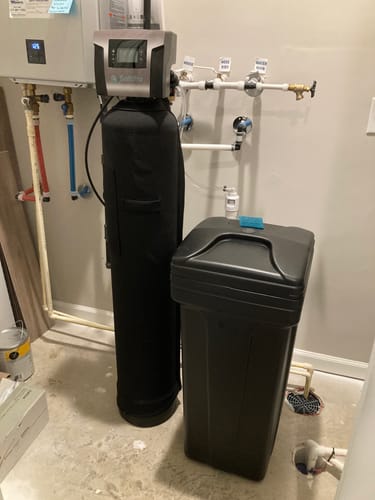
The SoftPro Elite HE caught my attention because it's specifically designed as a softener and iron filter combination. Unlike separate units that require multiple tanks and complex plumbing, this system handles both issues in a single, streamlined unit.
What sealed the deal was the high-efficiency design. Traditional softeners waste significant amounts of water during regeneration - sometimes 50 gallons per cycle.
The SoftPro Elite HE uses advanced algorithms and countercurrent regeneration to minimize water and salt consumption while maintaining peak performance.
The SoftPro Valve technology was another deciding factor. Unlike many manufacturers who use third-party valves, SoftPro designs and manufactures their own control valves specifically optimized for their resin formulations and regeneration cycles.
Unboxing and Initial System Assessment
The SoftPro Elite HE arrived in professional packaging that immediately conveyed quality. The main tank weighed considerably more than I expected - a good sign of robust construction and premium components.
The fiberglass tank construction impressed me right away.
Unlike plastic tanks I'd seen on cheaper units, this felt substantial and designed for decades of service. The tank dimensions (10" x 54") fit perfectly in our utility room with room for plumbing connections.
The SoftPro Valve mounted on top was clearly a sophisticated piece of engineering. The digital display was intuitive, and the valve body felt solid and precisely machined. All the internal connections appeared well-sealed and professional-grade.
Documentation quality exceeded my expectations. The installation manual was clearly written with detailed diagrams, and the programming guide explained each setting without requiring an engineering degree to understand.
Component quality inspection revealed premium materials throughout. The bypass valve was heavy-duty brass construction, https://www.trustpilot.com/review/softprowatersystems.com the drain line fittings were properly sized, and even the salt efficiency monitor showed attention to detail.
One pleasant surprise was the pre-loaded resin bed. Many systems require you to add resin during installation, but the SoftPro came factory-loaded with their specialized high-capacity resin blend designed for both softening and iron removal.
Installation Experience and Setup Process
I chose professional installation despite being fairly handy with plumbing. The complexity of proper system integration and the warranty requirements made professional installation worthwhile.
The certified installer arrived with all necessary fittings and tools, completing the job in about three hours.
This included installing the bypass valve, connecting the drain line, running electrical for the SoftPro Valve, and programming the initial settings.
Watching the installation process taught me about proper water softener placement. The unit needed to be positioned after the main water line but before the water heater to protect all downstream appliances and fixtures.
The bypass valve installation was crucial - it allows you to isolate the system for maintenance while maintaining water service to the house. The installer used high-quality compression fittings rather than cheap plastic connections I've seen on some jobs.
Programming the SoftPro Valve required inputting our specific water hardness level, iron content, and household size. The valve calculates optimal regeneration frequency and duration based on actual water usage rather than just running on a timer.
Initial system startup involved a manual regeneration cycle to properly condition the resin bed. This took about 90 minutes and consumed roughly 25 gallons of water - significantly less than conventional softeners that use 50 gallons per cycle.
The installer tested all connections for leaks, verified proper drain flow, and walked me through the basic operation and maintenance procedures. By evening, we had soft, iron-free water flowing throughout the house.
Comprehensive Performance Analysis After Months of Use
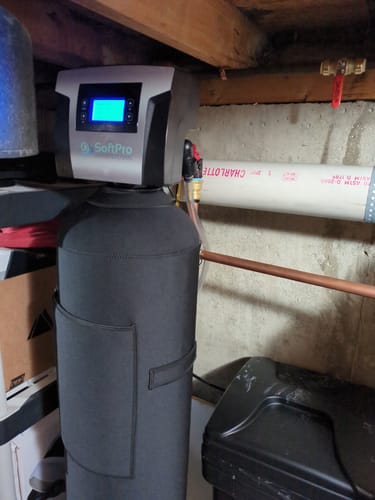 >
> After several months of operation, I can provide detailed performance data based on actual measurements and daily use observations.
Water Quality Improvements:
Our incoming water measures 18 grains per gallon hardness and 3.2 PPM iron. Post-softener testing consistently shows less than 1 grain hardness and undetectable iron levels. The improvement is dramatic and measurable.
The taste difference was noticeable within 24 hours. The metallic flavor completely disappeared, and our coffee tastes significantly better. Ice cubes are crystal clear instead of cloudy, and beverages taste cleaner and more refreshing.
Household Impact Observations:
Our dishwasher performance improved immediately. Glassware comes out spot-free without rinse aids, and we've eliminated the white film that used to coat everything. Dishes feel cleaner and don't have that slippery soap residue.
Laundry results exceeded expectations. Clothes feel softer, colors appear brighter, and we're using 40% less detergent while achieving better cleaning results. Our washing machine no longer has mineral buildup around the drum or dispensers.
Personal care improvements were noticeable within a week. My wife's hair feels softer and more manageable. Skin doesn't feel tight and dry after showers, and we're using less soap and shampoo while getting better lathering.
Appliance Protection Benefits:
The water heater efficiency improvement is measurable. Our monthly gas bill decreased by approximately 12% as the unit no longer struggles to heat through mineral-scaled elements. The lifespan extension alone justifies the investment.
Our espresso machine, dishwasher, and other water-using appliances show no signs of new mineral buildup. Maintenance intervals have extended significantly, saving both time and money on descaling products and service calls.
System Efficiency Metrics:
The SoftPro Elite HE regenerates every 6-7 days based on our family's water usage. Each cycle uses approximately 6 pounds of salt and 25 gallons of water - impressive efficiency compared to older technology.
Salt consumption averages about 35 pounds per month for our household of four. At current salt prices, that translates to roughly $8-10 monthly in consumables - very reasonable for the benefits provided.
Real-World Daily Living Improvements
The transformation in our daily routines became apparent within the first month of operation. These aren't just technical improvements - they're quality-of-life enhancements that affect our family every day.
Morning Routines Transformed:
Showers feel completely different now. The water lathers properly with minimal soap, and there's no residual film left on skin or hair. My wife mentioned that her hair stylist noticed the improvement and asked what products she was using.
Coffee preparation became a pleasure again. Our espresso machine produces rich, flavorful shots without the metallic undertones that plagued our morning ritual. Even simple drip coffee tastes noticeably cleaner and more aromatic.
Cleaning Task Simplification:
Bathroom maintenance time decreased dramatically. Soap scum formation virtually stopped, and the white mineral deposits around faucets and shower heads disappeared. Weekly bathroom cleaning takes half the time it used to.
Kitchen cleanup improved significantly. Dishes air-dry without spots, the sink doesn't develop mineral stains, and our stainless steel appliances maintain their finish without constant polishing.
Unexpected Benefits Discovered:
Our humidifier system works better now. Previously, mineral buildup would clog the unit within weeks. Now it runs cleanly for months without maintenance, and there's no white dust settling on furniture.
Indoor plants seem healthier too. The chlorine removal and balanced mineral content apparently create better growing conditions. Several plants that struggled previously are now thriving.
Visitor Feedback:
Guests frequently comment on our water quality. Friends who visit regularly noticed the difference immediately - particularly those who've experienced similar hard water issues in their own homes.
Our plumber, who services the neighborhood regularly, mentioned during a routine visit that our fixtures looked remarkably clean compared to other homes in the area. Professional validation is always reassuring.
Operational Costs and Efficiency Analysis
id="LOOX-V2_CAROUSEL-photo-reviews"
data-product-ids="7287104831530"
data-slide-type="photo_reviews"
data-show-review-text="true"
data-show-reviewer-name="true"
data-show-rating="true"
data-show-photos="true"
>
Understanding the true cost of ownership was important for evaluating the long-term value proposition. After tracking expenses for several months, I can provide accurate operational cost data.
Monthly Consumable Costs:
Salt consumption averages 35 pounds monthly at approximately $0.25 per pound, totaling about $8.75. Choosing high-quality solar salt prevents impurities that could damage the resin bed.
Electricity usage for the SoftPro Valve is minimal - the digital controls and regeneration cycle consume less than $2 monthly in electricity costs. The efficient design minimizes power requirements.
Water Usage During Regeneration:
Each regeneration cycle uses approximately 25 gallons of water, occurring every 6-7 days. Monthly water consumption for regeneration totals about 100-120 gallons, costing roughly $3-4 depending on local rates.
Compared to conventional softeners that use 50 gallons per cycle, the efficiency savings are substantial. Over a year, we save thousands of gallons of water while maintaining optimal performance.
Cost Savings Generated:
Detergent and soap consumption decreased by 30-40%, saving approximately $15-20 monthly on household cleaning products. Better lathering means less product needed for the same results.
Appliance protection value is harder to quantify but significant. Extended lifespan for water heater, dishwasher, washing machine, and other equipment easily justifies the investment. Avoiding premature replacement saves thousands of dollars.
Reduced maintenance costs for descaling, repair calls, and cleaning products add up quickly. We're saving approximately $25-30 monthly in various maintenance expenses.
Total Cost Analysis:
Monthly operational costs total about $15-18, while savings exceed $40-50. The net positive cash flow means the system pays for itself through operational savings alone, excluding the comfort and convenience benefits.
Honest Assessment: Limitations and Considerations
No system is perfect, and honest evaluation requires acknowledging limitations alongside benefits. After months of use, here are the drawbacks and considerations potential buyers should understand.
Space and Installation Requirements:
The system requires adequate space for the tank, salt storage, and drain access. Our utility room accommodated it easily, but smaller homes might find placement challenging. Professional installation is strongly recommended despite the additional cost.
The salt storage requirement means regular 40-pound bag handling. For some homeowners, especially older adults, this physical demand could be inconvenient. Salt delivery services are available in many areas to address this concern.
Maintenance Learning Curve:
Understanding optimal salt levels and regeneration timing took a few weeks to master. The SoftPro Valve provides helpful indicators, but initial adjustment required attention to system feedback and performance.
Occasional salt bridging in the brine tank requires breaking up with a broom handle. This happens rarely with high-quality salt but is an inherent characteristic of salt-based systems that owners should understand.
Water Waste During Regeneration:
While efficient compared to conventional systems, regeneration still uses 25 gallons every 6-7 days. Environmentally conscious homeowners should factor this into their decision-making process.
The regeneration typically occurs at 2 AM to avoid disrupting household water use, but the drain line flow can be audible in quiet homes. Our utility room location makes this a non-issue, but placement matters.
Sodium Content Considerations:
Salt-based softening adds sodium to treated water. While levels are typically minimal, individuals on sodium-restricted diets should consider this factor or install a reverse osmosis system at the kitchen tap for drinking water.
The system requires ongoing salt purchases and storage. During busy periods, we've occasionally forgotten to check salt levels, though the SoftPro Valve provides low-salt warnings to prevent system shutdown.
Initial Investment Reality:
The upfront cost is substantial compared to basic water treatment options. However, the comprehensive nature of the solution and long-term savings justify the investment for most households dealing with hard water and iron issues.
Įvertinimas

Hire top freelancers.